
What Makes Custom Plastic Components Reliable Across Years of Production?
Dimensional variation, complex molding features, or manufacturing changes can affect the consistency of custom plastic components produced months or years after the first order. These issues can reach beyond the component itself, affecting assembly, product quality, and production schedules. Evaluating components for long-term production requires attention to both the part's design and the manufacturing process. Material selection, critical dimensions, mold design, and quality requirements all influence whether a component can be produced consistently over repeated runs. Working with a custom injection molder early in product development lets engineers address these factors before you commit to tooling and production.
Design a Component for Repeatable Manufacturing
A component that works in a prototype or initial production run has passed an important milestone. However, its design must also lend itself to repeatable manufacturing. Features that are easy to control in a small sample run may become harder to control when the same part must meet specifications across recurring production orders.
Wall thickness is one example. Significant wall-thickness variations can cause uneven cooling, shrinkage, and warpage during injection molding. These effects can affect dimensional accuracy and a component's fit within a larger assembly. Draft angles, undercuts, and other geometric features also affect mold design, part ejection, and manufacturing complexity. Tolerances deserve similar attention. A drawing may specify tight tolerances across numerous dimensions, even when only a few directly affect fit, function, or performance. Each requirement should reflect the component's intended use and the manufacturing process's capabilities. Identifying critical dimensions helps engineers and molders focus inspection and process controls where variation is most likely to affect the finished product.
A design-for-manufacturability (DFM) review can help identify these concerns before the mold is built. Reviewing geometry, tolerances, material requirements, and production expectations together gives the engineering team a chance to resolve potential manufacturing problems while design changes are still manageable and cost effective.
Select Materials for the Operating Environment
Material selection affects how a component performs in service and how consistently it can be molded. The appropriate plastic should be chosen based on the application’s mechanical, thermal, chemical, electrical, and environmental requirements. For example, a component used in water or wastewater treatment may encounter moisture, treatment chemicals, or abrasive conditions, depending on its location and function. Components in power-generation equipment may face electrical or temperature demands, while parts in industrial machinery may need to withstand mechanical loads and vibration. Hand, power, and lawn care tools can place different demands on molded components through impact, wear, and repeated handling.
Material selection must account for conditions the part encounters and moldability. The resin must meet the component's functional requirements, while its processing behavior, shrinkage, and dimensional stability must ensure proper fit and clearances are not negatively impacted.
Custom injection molders can review the application alongside the proposed material and part geometry, helping the team identify trade-offs before committing to production tooling. When prototypes or design iterations are appropriate, they can also help the team evaluate whether the selected approach meets the required specifications.
Establish What Quality Means for the Component
A repeatable production process must also provide a way to verify the part meets specifications and respond when a part falls outside them. The OEM or customer must identify the characteristics that determine whether the component will function as intended. These may include critical dimensions, fit with mating parts, surface requirements, material properties, or performance under specified operating conditions. The inspection method and acceptance criteria should correspond to those requirements rather than relying on a general visual check for every application.
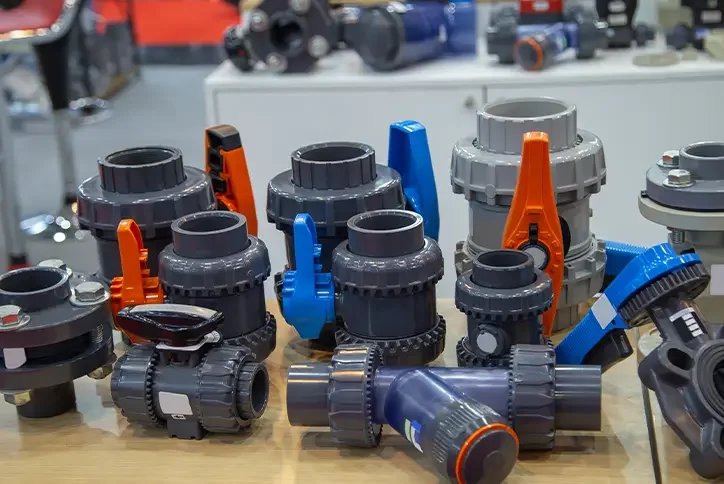
Some components also require functional testing. For example, a molded valve component used in a pressure-critical application may need leak or burst testing to verify that it meets the specified performance requirements. A dimensional inspection alone would not establish whether the finished component satisfies that functional requirement.
Quality planning should address what happens when a nonconforming part is identified. Containment procedures help prevent questionable parts from moving into assembly or reaching the customer while the issue is investigated. Depending on the circumstances, the response may involve additional inspection, rework where permitted, scrapping affected parts, or correcting the process that caused the problem.
Plan for Changes After Production Begins
Change is inevitable; the key is establishing a plan before it happens. An OEM may revise an assembly, change a mating component, update a material specification, or respond to a new operating requirement. Even a relatively small revision can affect an established molding process. Changing a critical dimension, wall thickness, or mounting feature may require a mold modification and additional validation. A resin change can affect shrinkage, processing conditions, or finished-part dimensions. Either type of revision may require updated inspection criteria and approval before the revised component enters production.
Because the implications of a change depend on how it affects the custom plastic component’s requirements, the team should review revisions with the molder rather than treat them as drawing updates alone. The team can assess the effect on tooling, manufacturing conditions, and part fit. Clear change-control procedures also help prevent different component versions from entering production without the required approvals. Keeping drawings, material specifications, and acceptance criteria current gives all involved teams a common reference for ordering and inspecting parts.
Of course, planning for change does not mean anticipating every possible revision. It means establishing a process for evaluating changes before they affect established production.
Consider the Mold as Part of the Manufacturing Process
The mold plays a direct role in producing consistent custom plastic components. While its initial design affects the molding process, maintenance matters just as much, making tooling support an important consideration for a component expected to remain in production for years. Before production begins, the engineering team and molder should establish how the tool will be maintained, who will repair it, and how changes to the mold will be assessed and approved, particularly when the component is expected to remain in production for an extended period. This establishes clear responsibilities.
Routine maintenance and timely repairs help address tooling issues as they arise. A structured approach also provides a way to investigate changes in part dimensions or quality rather than assuming every variation originates in the molding process itself. Depending on the issue, the cause may involve the tool, material, processing conditions, or the component's design.
Questions to Resolve Before Releasing Custom Plastic Components for Production
Before approving a component for ongoing injection molding, OEM engineering and purchasing teams should be able to answer several questions:
Which dimensions and material properties are critical to the component's function?
Have the design and tolerances been reviewed for repeatable injection molding?
Does the selected resin meet the documented operating and processing requirements?
How will dimensional and functional requirements be inspected or tested?
What procedures will contain nonconforming parts and address the cause of a problem?
How will engineering changes be reviewed, validated, and approved?
Who is responsible for mold maintenance, repairs, and future modifications?
These questions connect component design with the manufacturing controls needed to sustain production. They also help establish clear expectations between the OEM and its molding partner before recurring orders begin.
Plan for Reliable Production with E-S Plastics
At E-S Plastics, we understand that reliable long-term production gives customers confidence that conforming parts will arrive when needed, reducing the uncertainty, added work, and costs caused by inconsistent quality or delivery.
We work with OEM teams to review component geometry, tolerances, resin requirements, tooling needs, and quality criteria before production begins to help identify factors that can affect moldability, dimensional consistency, fit, and performance across recurring production runs. Our in-house tool room provides regular mold maintenance and as-needed repairs, to keep molds producing consistent parts across years of production. We evaluate engineering changes and determine whether tooling, processing, or inspection requirements must be updated as component requirements evolve, reducing the risk of quality problems, delays, and unplanned costs.
Contact E-S Plastics to discuss its plastic injection molding services for a new custom plastic component or an existing design intended for long-term production.